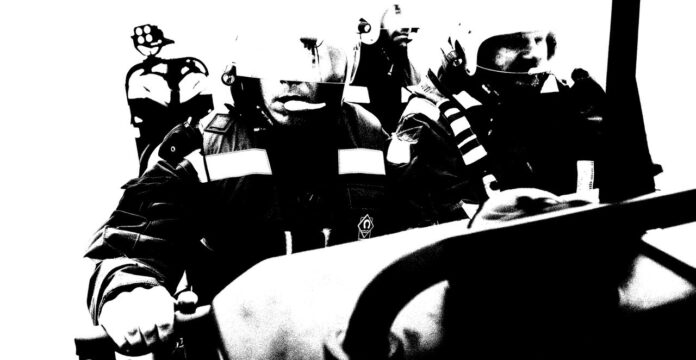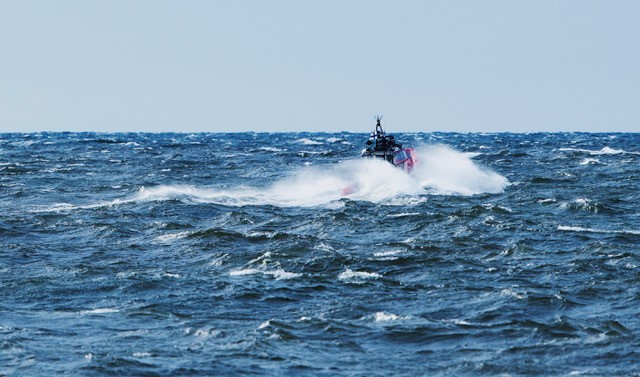
The performance of the crew in the cockpit work of high-speed workboats depends above all on how the organisation invests in the conditions for the work. Our new study, ”Supporting high-speed workboat crew performance with blunt-end human factors”, examined the perspectives of actors in maritime organisations on how crew performance should be supported from ”blunt-end” levels, referred to organisational and work-system-level factors – such as management, operating methods, resources, and training – that indirectly affect the crew’s activities. Although these factors are well known in safety research, there has so far been relatively little empirical information on their practical management in the target domain.
High-speed workboats are a key part of the operations of the rescue, defence and energy sectors, for example. In these environments, the demands on crew performance are exceptionally high, and decisions are made in constantly changing situations. As a result, safety and operational efficiency depend heavily on the seamless interaction of people, technology and the organisation.
The study was based on survey data collected from five Finnish high-speed workboat organisations. Responses were received across four organisational levels, providing a view of both operational and administrative activities. The survey was built on previously identified phenomena affecting crew performance and on the HF Tool framework. The approach combined practical operational experience with the theoretical frameworks of the Human Factors (HF) scientific field. The aim of the study was to map out which blunt-end HFs require the most development to support crew performance.
Moving from individual solutions to system-level cooperation
According to the study, the number one development target is crew cooperation and standardised socio-technical resource management, which reduces the need for improvisation and creates space for resilience in changing situations. Crew cooperation is not a ”soft thing” but an operational safety skill. Training in mastering HFs must be targeted across all levels of the organisation to ensure consistent, credible support for frontline work.
The results show that although HF information is already available, its systematic use in operational activities is still limited. The study highlights the need to move from traditional safety thinking to a more proactive approach. The traditional Safety-I approach focuses primarily on preventing errors and accidents, while the modern approach emphasises supporting successful operations and strengthening crew capabilities. Strengthening this perspective can help organisations better understand how safe and efficient operations are created in practice.
The study also highlights the importance of utilising the crew’s resources and expertise. The systematic application of crew resource management principles can support decision-making, situational awareness, and cooperation in environments where the operating environment changes rapidly and the workload is high. In addition, variations in technological solutions and operating methods can increase crews’ cognitive load. Increasing standardisation could reduce this burden and facilitate operational activities, especially in complex situations.
Organisational culture also emerged as a key factor in the study. In particular, a fair operating culture that supports learning was seen as an important prerequisite for open processing and continuous development of safety incidents, as has long been known in safety-critical domains. When employees feel that they can report observations and errors without fear of being blamed, the organisation can use these experiences to improve operations. Information must also be analysed and utilised; otherwise, access to it may run out.
An interesting observation in the study was that actors at different levels of the organisation largely agreed on the development needs. This suggests that the key challenges are widely identified in organisations. At the same time, it shows that HF development is not only a question at the operational level, but also requires strategic and administrative solutions. Many HFs that affect crew performance – such as resource allocation, technological solutions and operating culture – are created in the organisation’s structures and management practices.
The study emphasises that supporting crew performance in rapid maritime operations requires a shift from examining individual errors to mastering HF at the system level. This means examining the whole formed by people, technology and the organisation as a single system. The operating environment of high-speed workboats is demanding and risky, which is why developing systems that support crew performance is essential for both safety and resilience. The study provides an important empirical starting point for this and a direction for future HF development.
Mikko Lehtimäki,
Doctoral researcher, HF specialist
Lehtimäki, M., & Teperi, A. M. (2025). Supporting high-speed workboat crew performance with the blunt–end human factors. International Journal of Human Factors and Ergonomics. 12(3):242–272. https://doi.org/10.1504/IJHFE.2025.151130
The authors wish to thank the following for their invaluable support: the Finnish Cultural Foundation of South Ostrobothnia, the Otto A. Malm Foundation, the Ella and Georg Ehrnrooth Foundation, the Coastal and Freshwater Traffic Foundation, the Gustav B. Thorden Foundation, the Foundation for the Promotion of Fisheries and Maritime, the Finnish Maritime Foundation, and the Funder of work research and development.