This article has been published for the first time in Centria Bulletin. The author, Johanna Jansson, works as Director (RDI) at Centria University of Applied Sciences. She graduated with a Doctor of Science from the University of Vaasa in 2025.
After five years of doctoral studies, I reached the finish line in autumn 2025 and graduated with a Doctor of Science (Economics and Business Administration) degree from the University of Vaasa. Along the way, I picked up a few lessons that helped me stay on schedule, avoid burning out, and make the most of my study time. In this article, I reflect on that process by distilling the lessons into ten commandments for doctoral students, shared in the hope that they may be useful to others finding their way through postgraduate studies.
1. Know your “why”– make your motives clear to yourself
At some point, I think every doctoral student asks the same questions: Why am I doing this? Is it really worth the effort? When those moments came, going back to my original motivation proved crucial.
I applied for doctoral studies to to better understand leadership and organizations, sharpen my critical thinking and research skills, and build new professional networks. When the studies felt slow or messy, those reasons helped me keep the work meaningful.
If your motivation comes only from external expectations—because a PhD feels like the expected path in your family, or because your employer encourages you to pursue one— the process can quickly feel heavy. An inner motivation, something that genuinely matters to you, is what keeps you going. So, try to find the “why” that will carry you through.
2. Protect your calendar – doctoral studies are about self-leadership
Doctoral studies are far more independent than master’s studies. Progress depends less on external deadlines and much more on how well you set your own direction and manage your time. That is why your calendar becomes a key tool of self-leadership.
Studies rarely move forward if you plan to work on them “when you have time.” I quickly learned that such a time doesn’t exist — it disappears into a mysterious black hole in everyday life. Study time needs to be scheduled, just like work meetings or your weekly yoga class.
I mapped out a five-year timeline early on, combining study leave at the beginning and end of the process with doctoral work alongside my regular job in between. I discussed the plan with my line manager and applied for grant funding well in advance.
Over the years, I learned to protect my calendar and to be selfish in a healthy way. If time was reserved for studies, I tried to honour that agreement with myself, even when it was tempting to fill it with meetings or other tasks.
In short, studies will not progress unless you build them into your routines. While doing so, question your sense of urgency—very few things are truly urgent, and most (especially meetings) survive well until tomorrow, or even next week.
3. Don’t let the mammoth overwhelm you – just focus on the next small step
As a qualitative researcher, I am not much of a numbers person, but one simple calculation has stuck with me:
(1.00)365 = 1.00
(1.01)365 = 37.7
The point is simple: doing nothing every day keeps you exactly where you are, while doing something, however small, adds up surprisingly fast.
Doctoral studies often felt like a mammoth-sized project, especially compared to a master’s degree. Staring at the mammoth only made me feel dizzy. What helped me was keeping my eyes on the ground and focusing on the next tiny step, whatever created a sense of progress.
Once I stopped thinking about the mammoth as a whole, my relationship with time changed as well. Doctoral work does not always require long, uninterrupted hours of intense brainwork. Small moments count, too. After finishing my workday, I would spend 15 to 30 minutes on my studies before heading home. On weekends, when my family slept longer, I found my golden moment for studying on quiet Saturday and Sunday mornings.
The trick was knowing what to do next. When a small time window opened, I already had a task waiting: find a new reference, write one more sentence, polish a paragraph. Step by step, the mammoth became manageable—and eventually, the finish line came into view.
4. Remember that a research plan is just that – a plan
I spent three months writing my research plan for an article-based dissertation and put my heart and soul into it. Looking back now, only one term—human resource (HR) practices—made it from the original 15-page plan into my dissertation. None of the articles I had planned did, nor did the originally intended datasets.
For a long time, this stressed me out. The research plan didn’t seem to come together, and I kept wondering whether I was focusing on the right things. Along the way, I said yes to opportunities for co-authorship within our research group. The topics did revolve around my research theme, but I had no idea how they would eventually fit together.
The turning point came when I started to see the research plan simply as an entry ticket to doctoral studies. Once I adopted that perspective, much of the stress faded. A research plan is meant to evolve. It should change as your research questions mature, your data surprises you, and especially as opportunities for collaboration arise. Trusting the process and the experienced researchers around me turned out to matter more than sticking to the plan.
In the end, the three articles formed a coherent multilevel study of HR practices (Jansson 2025), far better than anything I could have planned. Going with the flow turned out to be a surprisingly freeing and educational experience for a committed planner—very much out of character for me. So, be prepared for things not to go as planned. They just might turn out better that way.
5. Write a lot and write badly – writing is thinking!

One of the most useful lessons I learned was to stop aiming for a perfect text right away. Writing is not just about polished paragraphs; it is how thinking happens. It helps to accept that most of what you write will never be published, and that is exactly the point. Much of my writing existed simply to help me make sense of my own thinking.
After reading piles of research papers, my head was often buzzing, but getting those ideas out neatly felt surprisingly difficult. So, I stopped waiting for the “right words” and just started writing. Badly. I ignored grammar, spelling, and structure and let the text just spill out. Later, I returned to the mess to see what was worth keeping. That was when the real work began: picking the diamonds out of chaos and turning rough writing into something useful. Free-writing (see e.g., Friedlander 2010) is worth adding to your academic toolbox.
As my research progressed, I also noticed something that felt paradoxical at first: the more I learned, the less I needed to say. Getting there, however, required a lot of writing at first. Only later did I learn that this was not just a personal revelation, but a well-known phenomenon, captured in the observation attributed to Albert Einstein: “If you can’t explain it simply, you don’t understand it well enough.”
6. Be kind to yourself – let others handle the criticism
Doctoral studies are demanding, but in the end, they come down to trusting that that you will get through them, one way or another.
Whenever I ran into challenges, I reminded myself that this, too, was just part of the process. I remember this particularly well from a doctoral course on quantitative methods. Armed with a basic grounding in statistics from my master’s studies some fifteen years earlier and a huge amount of optimism, I enrolled in the course eager to make sense of quantitative research. It was a five-day course with daily lectures and workshops, and I was genuinely excited about spending a dedicated study week in Helsinki, away from everyday routines.
Within the first fifteen minutes of the course, some students gave up and left. That was the moment I realized I was also very much in the wrong place. I didn’t even know how to ask questions in a way that would make the professor understand just how basic my level really was.
So, I made a deal with myself: Okay. I won’t understand much of anything this week, but I’ll stay. I’ll manage somehow. And I did. I passed the course on my first attempt, with a good grade—eternally grateful for the overwhelming supply of “statistics for dummies” material on YouTube.
Looking back, it wasn’t a sudden passion for multilevel regression models or factor analysis that got me through. I survived because I didn’t start putting myself down.
Doctoral work involves long stretches alone with your own thoughts, which makes your inner dialogue remarkably important. Pay attention to how you talk to yourself: be as encouraging and kind as you would be to a close colleague or a friend.
As for critical feedback, don’t worry. It will come from many directions, from reviewers, editors, and supervisors alike. Save your energy — there is no need to generate more of it yourself.
7. PhD studies are independent work – but don’t do it alone
Doctoral studies can feel lonely, especially if you’re not based in the university city. I wasn’t. So I made a conscious decision to invest in interaction with my supervisors. Showing commitment to studies paid off in many ways: quick replies, constructive and guiding discussions, shared writing, access to data, and a practical education in navigating the journal review process.
Joining a research group was another game changer. I found not only a co-author but also a sense of community, which I eventually started calling a kind of scholarly sisterhood. Writing together was a good reminder that science today is rarely a solo pursuit.
I also connected with colleagues at work who were starting their own doctoral studies. We formed a small multidisciplinary group, sharing lunches, tips, experiences, frustrations, and small victories. Turning your studies into a social experience makes things much easier: a published article is twice the joy, and a rejection only half the pain.
8. Eat, sleep, study, repeat – make room to recharge
Doctoral studies are a long-distance event, not a sprint, and life doesn’t (and shouldn’t) pause while you’re doing them. For me, survival started with sleep. I avoided writing late at night — once sleep goes, everything else tends to follow.
Physical activity became another anchor: jogging and cross-country skiing cleared my head and reset my focus. One particularly memorable study week I spent alone in Lapland—writing in the mornings, skiing along wilderness trails in the afternoons. About as good as research can get.
Equally important was switching off researcher mode. Managing a junior football team and pushing myself out of the house on low-energy evenings to spend time with friends reminded me that life extends well beyond Scopus and reviewer comments.
Looking back, doctoral studies were also an exercise in weighing trade-offs. The degree itself mattered, but not at the expense of health, relationships, or moments that cannot be recovered. Sprinting the hills may feel tempting, but it rarely ends well in a long-distance event.
9. Be prepared – your research might actually interest someone
Little did I know, when drafting my research plan in early 2020, what I was getting myself into. Almost overnight, my research topic—HR practices in remote work environments—became a global organizational concern as the COVID-19 pandemic closed offices around the world.
In Finland, education is publicly funded all the way up to the doctoral level. Having benefited from this, I felt a responsibility to say yes to interview requests that would take my research beyond academic journals and into public conversation. On top of that, societal impact has become an increasingly central part of doing science (CoARA 2025), encouraging researchers to engage more broadly beyond scholarly publishing.
Along the way, I found myself doing things I had never imagined when considering doctoral studies: appearing on live morning TV, talking to journalists from newspapers and trade magazines, and giving interviews for radio and a podcast. So be prepared, your research might attract media attention.
At first, stepping into the expert role felt slightly awkward: Do I really know enough to talk about this? The answer is yes. And more importantly, it’s your perspective people are asking for. So be ready to talk about your research clearly and accessibly — and trust that you belong in the conversation.
10. Take more with you than a degree
Doctoral studies are not only about reaching the finish line — they are very much about the process itself. Take the time to enjoy it. Meet people, attend conferences, and participate in doctoral courses abroad that are organized through international networks and alliances.
My highlights included the Nordic HRM doctoral course at the University of Gothenburg, where I connected with PhD candidates from all the Nordic countries, and the Nordic Academy of Management conference in Reykjavik. Both were made possible through travel grants from my home university, so it’s worth checking what funding options your university offers.
After the conference, I stayed on to explore Iceland’s breathtaking landscapes. On the journey home, I even watched a newly begun volcanic eruption light up the horizon near the village of Grindavík. This moment reminded me that doctoral studies are a truly special period in life. They offer unexpected experiences, as well as space for professional and personal growth and new connections. So do make the most of it!
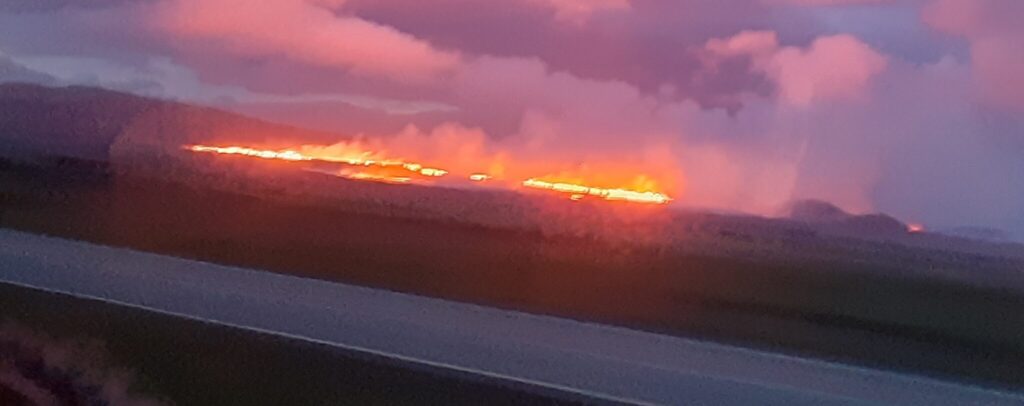
A volcanic eruption on the way to Keflavik airport. Photo: Johanna Jansson.
References
Coalition for Advancing Research Assessment (CoARA). 2025. What is CoARA? Available at: https://www.coara.org/. Accessed 29.12.2025.
Friedlander, J. 2010. Unleash Your Creativity Now: How to Freewrite. The Book Designer. Available at: https://www.thebookdesigner.com/unleash-your-creativity-now-how-to-freewrite/. Accessed 22.12.2025.
Jansson. J. 2025. Balancing Employee Preferences and Organizational Expectations for Mutual Gains: A Multilevel Approach to Implementing HR Practices in Remote Work Arrangements. Vaasa: University of Vaasa. Acta Wasaensia, 562. Doctoral dissertation. Available at: https://urn.fi/URN:ISBN:978-952-395-215-7. Accessed 29.12.2025.
Johanna Jansson
Director (RDI)
Centria University of Applied Sciences
p. 040 480 7570